| Route | Duration | Distance |
|---|---|---|
| PP to Siem Reap | 4h 30m | 290 km |
Our Fleet
Why Choose a Private Taxi?
- Safety First: Our drivers are experienced on this specific highway and prioritize your safety over speed.
- Door-to-Door Service: No need to navigate bus stations; we pick you up at your hotel or the airport and drop you directly at your destination.
- Total Flexibility: Want to stop for a photo, a coffee, or a restroom break? You’re in control of the schedule.
- Travel in Comfort: Avoid crowded buses. All our vehicles are clean, feature powerful air conditioning, and offer plenty of legroom.
Battambang Travel Guide: History, Culture, and Practical Travel Information
Battambang, Cambodia’s second-largest city by population, balances a rich cultural heritage with a relaxed, small-town charm. Located in the northwest, it is renowned for its well-preserved French colonial architecture, artistic community, fertile landscapes, and historic temples.
1. History
Established in the 11th century during the Khmer Empire, Battambang has long been a vital trading hub due to its location and fertile soils.
- The Thai Era: From the late 18th century until 1907, Battambang—along with Siem Reap—was under Siamese (Thai) administration, ruled by the Aphaiwong governor family. This century-plus of Thai influence left a distinct mark on the region’s older architectural styles and cultural administrative history.
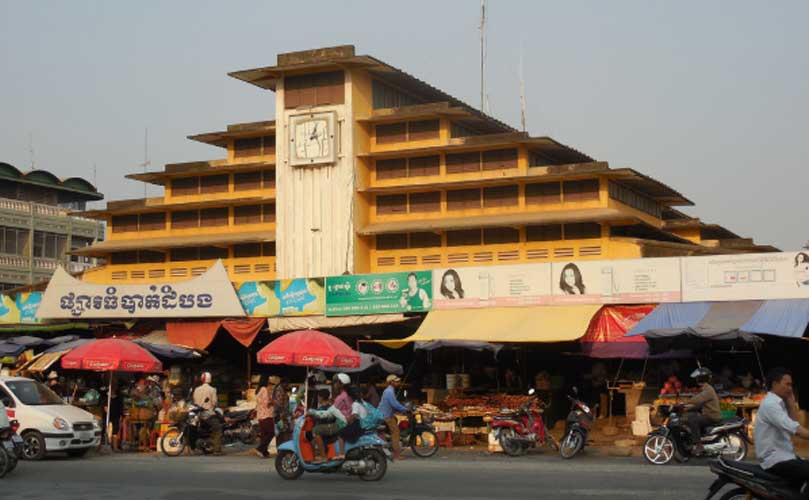
- French Colonial Rule: In 1907, the province was ceded back to Cambodia under the French Protectorate. The French completely modernized the city layout, designing a grid system along the Sangkae River and building the elegant colonial shopfronts, residences, and the central market (Psar Nat) that characterize the city center today.
- Modern Era: Battambang served as a major agricultural stronghold throughout the 20th century. While it suffered heavily during the Khmer Rouge regime, the city managed to preserve much of its historic architecture from wartime destruction, allowing it to emerge today as Cambodia’s leading cultural and artistic hub.
2. Geography
Battambang is situated in northwestern Cambodia, approximately 290 kilometers from the capital city of Phnom Penh.
- The Heart of the City: The Sangkae River divides the urban center, acting as the geographical and social lifeline of the town.
- The Rice Bowl of Cambodia: The surrounding province consists of vast, low-lying alluvial plains. Fed by the river systems coming down from the Cardamom Mountains, these incredibly fertile lands make Battambang the primary rice-producing province in the country.
- Landscape: Beyond the endless green rice paddies, the landscape is dotted with dramatic limestone karst mountains (phnoms), such as Phnom Sampov and Phnom Banan, which rise sharply out of the flat plains.
3. Climate
Battambang experiences a tropical wet-and-dry climate typical of Southeast Asia, divided into two main seasons:
- The Cool & Dry Season (November to February): This is the most popular time for tourism. Temperatures are pleasantly warm during the day (around 28°C to 32°C) and drop to cooler, comfortable levels at night.
- The Hot & Dry Season (March to May): Temperatures rise significantly, often reaching 38°C to 40°C. The landscape becomes drier, and midday outdoor activities are best avoided.
- The Rainy Season (June to October): High humidity and regular afternoon downpours characterize this period. While travel logistics can occasionally face minor rain delays, the countryside transforms into a vibrant, lush emerald green, and the Sangkae River flows at full capacity.
4. How to Get There (from Phnom Penh)
Traveling the 290 km route from Phnom Penh to Battambang takes between 4 to 6 hours depending on your chosen mode of transportation:
- Private Taxi Transfer (Recommended for Comfort): The fastest and most comfortable option. Taking a private car allows you to travel door-to-door on your own schedule with options ranging from fuel-efficient sedans (like a Toyota Prius) to spacious SUVs (like a Highlander or Lexus). The drive takes roughly 4 to 4.5 hours via National Road 5.
- Public Bus / Minivan: Several local transport companies run daily scheduled buses and express minivans between the two cities. Express minivans take about 5 hours and offer a budget-friendly option, though they stick to rigid schedules and fixed drop-off points.
- The Royal Railway Train: For a nostalgic, scenic journey, a train operates from the Phnom Penh Railway Station to Battambang. While affordable and scenic, it is much slower than road travel, often taking 6 to 7 hours.
5. Getting Around Battambang
Navigating the city and its surrounding countryside is straightforward:
- Walking: The historic French Quarter along the west bank of the river is compact, flat, and highly walkable—ideal for exploring architecture, cafes, and local art galleries.
- Remork (Tuk-Tuk): For mid-range distances or half-day trips to local attractions, local remorks are readily available. You can easily hail them on the street or book them through local ride-hailing apps like PassApp and Grab.
- Bicycle / Motorbike Rental: Many guesthouses and shops rent bicycles or automatic scooters. This gives you complete freedom to explore the narrow dirt roads winding through the local villages and rice fields.
6. What to Do & See
Battambang offers an excellent mix of cultural heritage, wildlife, and historical landmarks:
- Ride the Bamboo Train (Norry): A unique, world-famous transport experience. Ride a small, improvised bamboo platform powered by a small tractor engine down a scenic stretch of railway tracks just outside the city.
- Phnom Sampov & The Bat Caves: Visit this historic hilltop temple complex to explore natural caves and moving Khmer Rouge memorial sites. At dusk, gather at the base of the mountain to witness millions of bats emerge from the caves in a massive, snake-like formation across the evening sky.
- Phare Ponleu Selpak: Attend an evening performance by this internationally acclaimed NGO and arts school. The spectacular show blends traditional Khmer storytelling with jaw-dropping contemporary circus arts, acrobatics, and live music.
- Phnom Banan: Climb the 350+ stone steps of this 11th-century Angkorian temple. Located on top of a mountain, the ruins offer panoramic views of the surrounding countryside and winding river.
- Explore the French Quarter & Local Art: Wander through the historic center to admire the colonial architecture, visit the bustling Psar Nat market, and stop by local art studios, independent galleries, and specialty coffee shops.
- Countryside Cycling Tours: Take a guided bicycle tour through local villages to see how traditional products like rice paper, banana chips, rice wine, and fish paste (prohok) are made by hand.


